
Densery is the agent experience platform — onboard agents like employeesSee the platform →
Data hall
Case studies

Agents at work inside real operations.

One case from each industry we work in. Names withheld by agreement with our customers; every one of them takes a reference call, and the closest to your situation is arranged in the first conversation.

In industry order

BankingFinancial servicesInsuranceTelecomManufacturing

Banking · on-premise

A top-tier bank, eleven million customers, sixty-plus documents to every credit application — read, cross-checked and written back inside its own walls. One hour to five minutes.

Document handling time removed
92%
Per document, from one hour
5 min
Documents per application
60+
FTE returned to the business
5.2

Deployment

On-premise GPU appliance. Loan and credit process and files, appraisals, invoices — all within your geographic, legal and organisational boundary.

What it proves

A bank with more than 200 branches ran its credit process on people reading documents: every application arrived with more than sixty supporting papers, each one read, keyed and cross-checked by hand before a credit officer could form a view. Densery reads the whole set as it arrives, reconciles it against the loan checklist, and passes assessed, structured output into the approval workflow, the core and the bank's existing automation — on the bank's own hardware, with appraisal files and the back office's invoices and expense claims read, checked against policy and routed by Densery workflows off the same deployment. Two centres — credit and finance — are served by one system. The credit clock now measures judgement, not clerical throughput.

Where else this applies

Any lender whose approval time is set by paperwork rather than credit judgement, and any bank under a residency obligation — from its regulator, its board, risk committee or its parent.

Book 30 minutes

Financial services · captive auto finance

Every regulator request answered complete and on time from a 100-page loan file — live in a single morning.

Extraction accuracy, up from 80%
~100%
Pages per document, end to end
100+
Morning from problem to production
1
Staff returned to the business
6

The problem

The captive finance arm of a global automaker receives periodic requests from the authorities for information on specific borrowers. Each starts a statutory clock, and a lender that fails to answer in full and on time can be blacklisted — and a blacklisted lender cannot keep writing loans. The legacy OCR ran at about 80% accuracy on files of 100 pages and more, and returned PDFs that a six-person team re-keyed by hand before anything could be sent. Follow-up questions meant reopening the file from the start.

What Densery did

Densery reads each document, checks it against the contract and the policy, flags the mismatch with the page highlighted and writes the result into loan origination, the core and the customer app as structured data. When the regulator asks, the answer comes from the same record — complete, accurate and inside the deadline — and a supplementary request is answered from the same source without re-reading the file. The lender's own IT team integrated it through open APIs; the elapsed time from describing the problem to running in production was a single morning.

The result

Near-100% accuracy held on 100-page files. Manual re-entry gone, and with it the delay and the second source of error. Six people returned to higher-value work. A compliance exposure the company itself called existential became a demonstrable strength, and the IT team is now taking the same platform to further processes across the business.

Where else this applies

Any lender whose regulator can ask for a borrower's file on a clock — auto, consumer and equipment finance, and the captive arms of manufacturers under a parent's data policy.

Book 30 minutes

Insurance · life · in production

Claims underwritten and settled for a top-three life insurer — every document checked at intake, answered in the customer's app, not in weeks.

Claim documents checked at intake
100%
From order to live claim processing
1 month
Decision path
Weeks → in-app
Third-party administration
Brought in-house

The problem

A top-three life insurer, distributing through a bank's branches, was replacing its core policy system. Every claim arrived as a bundle of hospital records, invoices, discharge papers and physician statements, in whatever format the hospital produced, and every one was read by hand — by the claims team and by a third-party administrator. Customers waited weeks for a decision. The cost of the claims operation tracked headcount, not volume, and a mismatch between a document and the policy was found at assessment, late, rather than at intake.

What Densery did

First, the environment: an integration and shared-services layer between the new core and the channels — one digital platform carrying the sales, after-sales, new-business, policy-servicing and claim flows, with reconciliation and customer correspondence generated from the record. Then, on that platform, agents that read every claim document as it arrives, check it against the policy and the claim, flag a discrepancy with the page highlighted before an assessor sees the file, and write the checked claim into the claims flow through the platform's own API. From order to live processing took a single month, because the platform was already there.

The result

Every claim document is checked at intake rather than sampled at assessment, so a mismatch is caught before it costs a decision. Straightforward claims are answered in the customer's app as soon as the documents arrive; assessors take the exceptions. The insurer brought third-party administration back in-house and cut the cost of the claims operation, and the same platform now carries the rest of its core transformation.

Where else this applies

Every life and health carrier — and every bancassurance partnership — runs on the same third-party clinical documents, with no control over format and an expensive consequence when a detail is missed. Any insurer mid-core-replacement has the same opening: put the document work on the new platform, not beside it.

Book 30 minutes

Digital infrastructure · on-premise

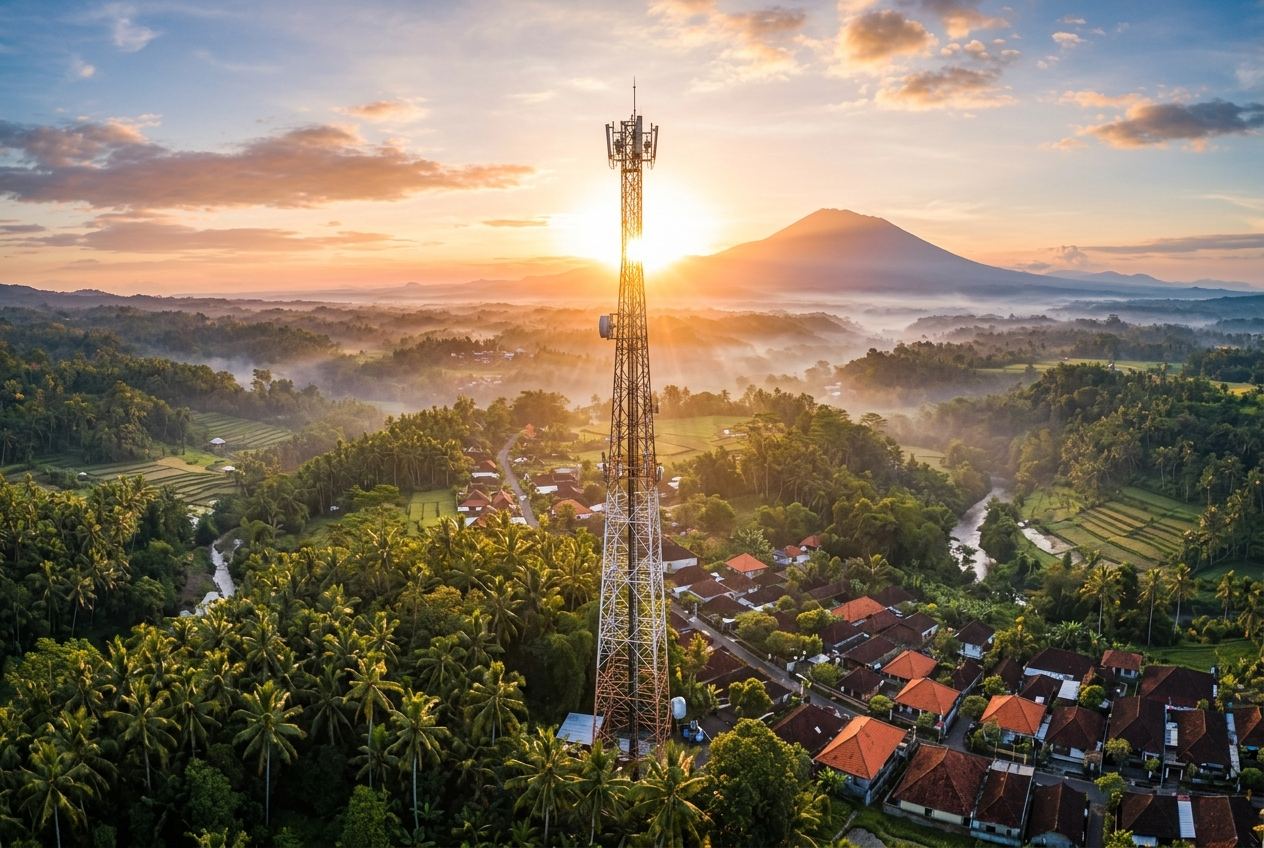
Every field inspection photograph checked automatically — 36,500 towers, 3.65 million images a month.

Of inspection images checked, up from 1–2%
100%
Photographs analysed a month
3.65M
Towers under automated inspection
36,500
Fewer second visits
87%

The problem

The country's largest independent tower company leases capacity to every mobile operator, so availability is what it sells. Each tower is visited monthly and inspected against a 206-item checklist; crews photograph what they find. The images were the only durable evidence the estate was sound, and the volume was far beyond what the back office could review — an estimated 1–2% a month. Faults surfaced weeks later, if at all, and closing one out meant a second visit to a site the crew had already left. Across 36,500 visits a month the same condition could pass in one report and fail in another, and nobody could measure it.

What Densery did

Vision agents read each photograph against the checklist item it was submitted for and answer in seconds, into the field app the crews already use. The operator's own thresholds are encoded as rules, so every site is judged the same way. Inference runs on the operator's own GPUs behind open APIs into the existing mobile app and reporting systems. More than 90 inspection scenarios are in production; from contract signature to fully trained models in the field took under 100 days.

The result

Every image checked instead of a sample, with no added back-office headcount. Second visits down 87%. Defects corrected before they become outages. Condition held as structured data against every asset, so maintenance is scheduled on evidence rather than on a fixed calendar — and every hour a tower stays in service is leaseable capacity earning revenue.

Where else this applies

Any operator of distributed physical assets under a maintenance regime — towers, fibre, utilities, renewables — where the field photograph is the evidence and nobody has time to look at it.

Book 30 minutes

Manufacturing · import-export

Twenty document types, six hundred fields, counterparties worldwide — checked against each other before the declaration is filed.

Manual verification and data entry removed
80%
Fields per consignment file
600+
Document types
20
FTE returned to the business
4

What it proves

A life-science manufacturer with an integrated sourcing, production and logistics ecosystem ran its import-export desk on people: half a ten-person team spent all their time cross-checking documents by eye and typing the same values twice — once for the customs declaration, once for the internal system. Densery reads the consignment file as one record, reconciles the documents against each other at intake, and delivers standardised output to both systems. Discrepancies now surface at the desk, with the field named, before customs ever sees them.

Where else this applies

Any manufacturer or importer whose shipments arrive as a set of documents that have to agree with each other, and whose people type the same values twice.

Book 30 minutes

Manufacturing · knowledge and reporting

Policies, procedures and every new government circular — one place, one question, one answer.

A national fertiliser producer running three plants and an export business had two kinds of information that never met. Operating data in systems that could be reported on, and the policies, procedures and regulations governing it in documents nobody could search. Densery brought both onto one platform. Internal documents indexed, government publications collected, reporting queried in natural language with access governed by role and department. Employees answer their own questions.

Manufacturing · steel fabrication

Structural steel drawings read as geometry, the take-off written into the estimating system.

A drawing carries its meaning in the relationship between a dimension, a line, a section mark and a note in the corner — a tool that reads text off the page returns numbers with no idea which belongs to what. Densery agents read the drawing as geometry, convert it to quantities, lengths, weights and cut lists, and write the take-off into the estimating system, so the most experienced estimator in the building spends the day judging rather than counting. In production at a steel fabricator.

Is Densery right for you?

Densery fits best where the work is document-heavy, where the answer has to be right, and where the data has to stay inside your walls. If that sounds like your operation, thirty minutes is enough to find out.

Thirty minutes with Densery.

Tell us about the work you want an agent to finish. We listen first, then show you the platform and the case that is closest to yours. This is a working session, not a sales pitch.